
Goods Clearance Services
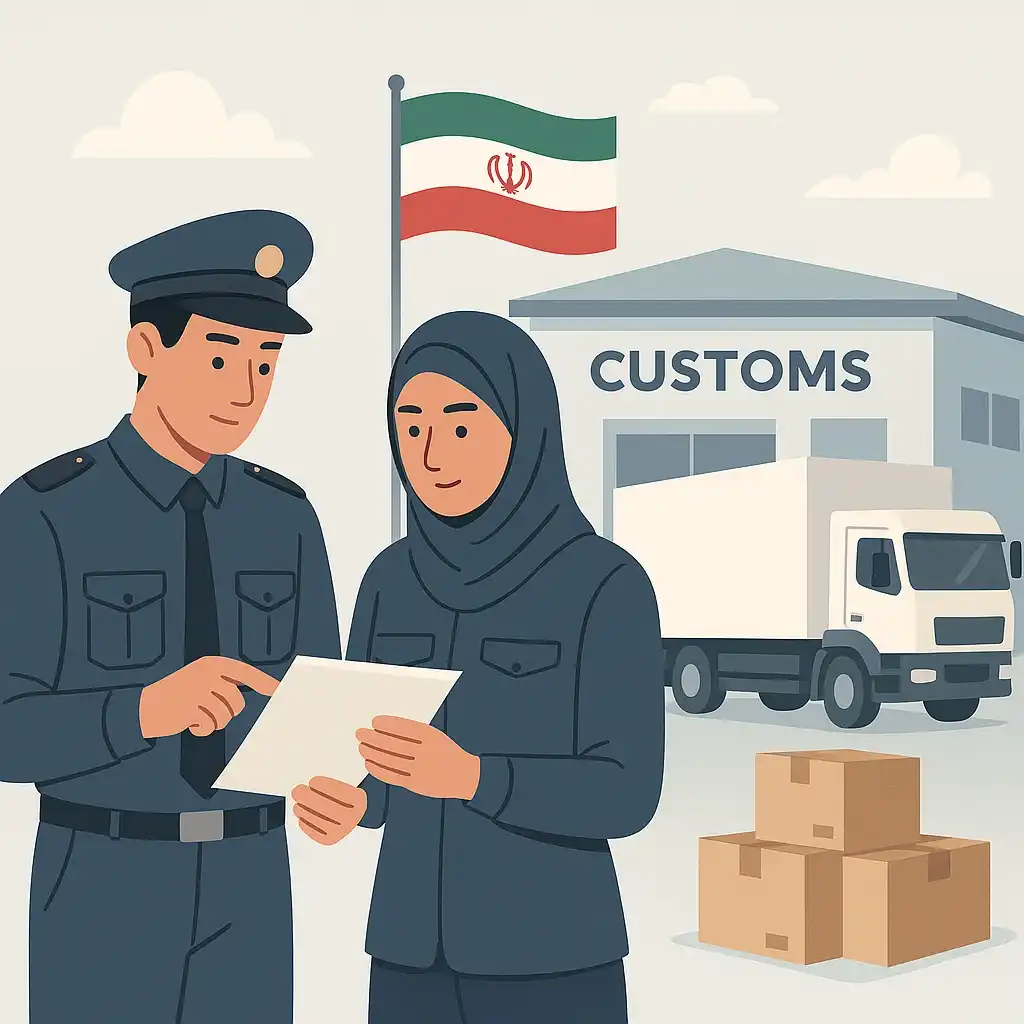
Goods clearance is one of the most important and vital stages in the international supply chain and foreign trade. This process is, in fact, the final point of entry of a good into a country’s customs territory (import) or its exit from this territory (export). Without successfully completing this stage, no good can legally cross the country’s borders and reach its final recipient or be shipped to a foreign destination. The main basis and framework of the clearance process is a set of customs laws, regulations, instructions, and procedures developed and implemented by the Customs Organization of the Islamic Republic of Iran. These laws may vary based on the type of goods, their origin or destination, the method of transportation, the value of the goods, as well as the specific regulations of each customs office.
The main purpose of this document is to provide a comprehensive and accurate guide regarding the stages, documents, costs, and key points related to goods clearance from all customs offices in the country. The ultimate goal of this information is to empower merchants, trading companies, producers, goods owners, and all economic actors to be able to complete this complex process with the minimum error, in the shortest possible time, and by optimizing costs. A deep understanding of this process not only helps prevent the waste of time and additional costs but also prevents legal problems, heavy fines, seizure of goods, and other irreparable damages.
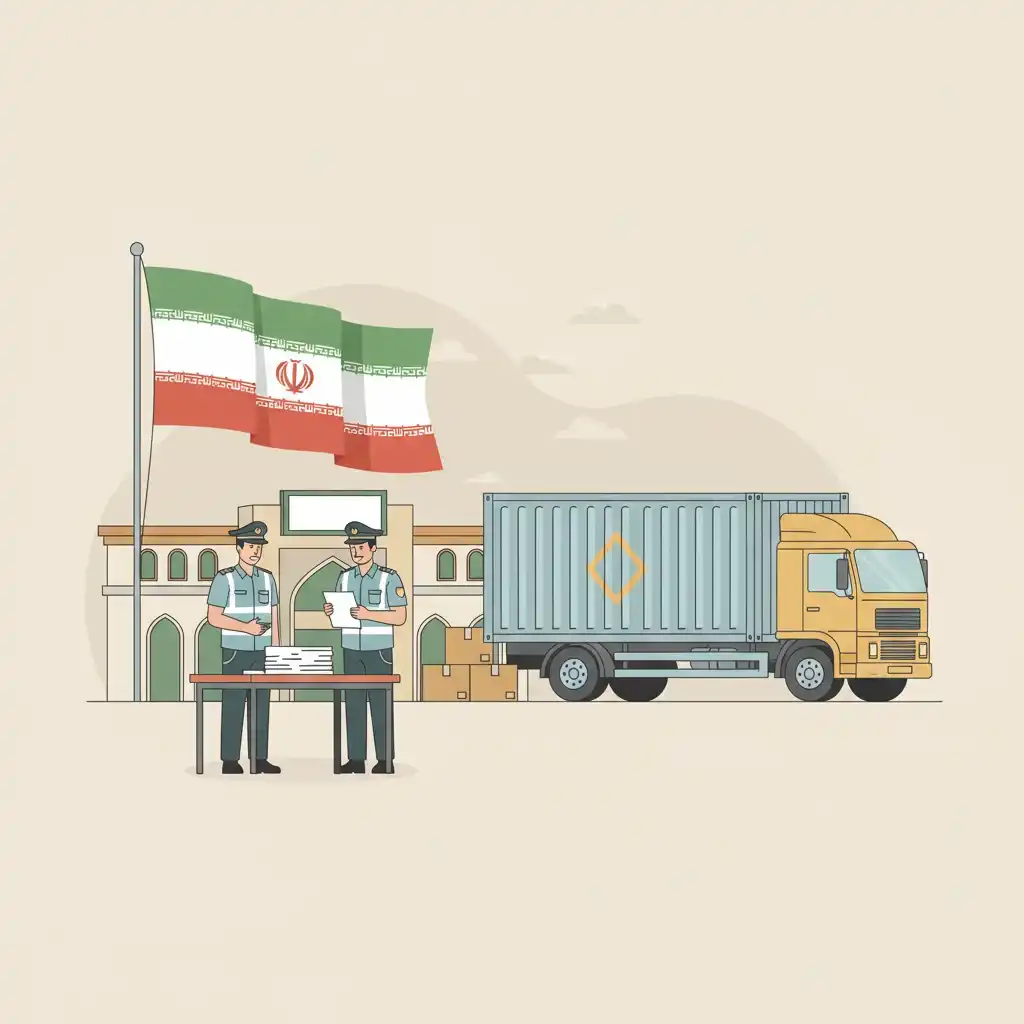
Iran, due to its strategic geographical location, has extensive land, sea, and air borders, which has led to the establishment of diverse customs offices across the country. Each of these customs offices, depending on its geographical location, infrastructure type, and volume of trade exchanges, has a special focus on specific types of goods or methods of transportation. Knowing the types of customs offices is essential for choosing the most suitable entry or exit point for goods and preparing for the specific procedures of that customs office.
These customs offices are located adjacent to the coasts of the Caspian Sea in the north and the Persian Gulf and the Sea of Oman in the south, playing a vital role in Iran’s maritime trade.
Southern Customs Offices (Persian Gulf and Sea of Oman): These customs offices form the main artery of the country’s imports and exports, and a massive volume of goods, especially bulky goods, industrial raw materials, petrochemical products, vehicles, and containerized goods, are imported or exported through them.
Shahid Rajaee Port (Hormozgan Province): Iran’s largest and most equipped commercial port and the main hub for the country’s imports and exports, especially for containerized and bulky goods. This customs office has a high capacity for clearing various types of goods, including vehicles, agricultural inputs, and mineral products.
Imam Khomeini Port (Khuzestan Province): Iran’s second-largest commercial port, with a special focus on importing essential goods, grains, chemical fertilizers, mineral materials, and petrochemical products. This port has specialized jetties for loading and unloading various types of goods.
Bushehr Port (Bushehr Province): One of the other important commercial ports in the south of the country that plays a role in the clearance of general goods, foodstuffs, and also the export of fishery and agricultural products.
Chabahar Port (Sistan and Baluchestan Province): Iran’s strategic port in the Indian Ocean, with high potential for transit of goods to neighboring countries (Afghanistan and Central Asia) as well as imports and exports.
Northern Customs Offices (Caspian Sea): These customs offices are mainly important for trade with the littoral states of the Caspian Sea (such as Russia, Kazakhstan, Turkmenistan, and Azerbaijan) as well as the transit of goods to these regions.
Anzali Port (Gilan Province): Iran’s largest port on the Caspian Sea, which acts as a gateway from Europe to Iran and vice versa. This customs office is used for the import and export of goods with northern countries and also for the transit of goods to Central Asian countries.
Nowshahr Port (Mazandaran Province): Another important port on the Caspian Sea active in trade with northern countries.
These customs offices are located at the country’s dry border points and are mainly used for road transportation of goods, transit, as well as the entry and exit of passengers.
Bazargan Customs (West Azerbaijan Province): The most important border customs office between Iran and Turkey and the gateway for the entry of goods from Europe to Iran and vice versa. This customs office is also very active for the transit of goods to other countries.
Mehran Customs (Ilam Province): One of the busiest border customs offices with Iraq, mainly used for the export of goods to Iraq and also the entry of pilgrims.
Dogharoon Customs (Razavi Khorasan Province): The shared border with Afghanistan, which plays an important role in the export of goods to this country and the transit of goods through it.
Razi Customs (West Azerbaijan Province): The shared border with Turkey, which is used for the movement of goods and passengers.
Piranshahr Customs (West Azerbaijan Province): The shared border with Iraq, which is important for trade and the movement of goods.
Bashmaq Customs (Kurdistan Province): The shared border with Iraq, active in the field of exports and imports.
Parvizkhan Customs (Kermanshah Province): The shared border with Iraq, one of the active customs offices in the field of exports.
Lotfabad Customs (Razavi Khorasan Province): The shared border with Turkmenistan, active in exports and imports.
Sarakhs Customs (Razavi Khorasan Province): The shared border with Turkmenistan, the gateway for rail and road entry and exit of goods.
Astara Customs (Gilan Province): The shared border with Azerbaijan, important in maritime and land trade.
These customs offices are located in the country’s international airports and are used for fast and safe transportation of goods, especially valuable, sensitive, vital, or low-volume consignments.
Imam Khomeini Airport Customs (Tehran): The main air customs office of the country and the place of clearance for the majority of air imports, air exports, and air transit.
Mehrabad Airport Customs (Tehran): Mainly used for domestic flights and some limited international flights.
Customs Offices of Major City Airports: Such as Isfahan Airport Customs, Mashhad Airport Customs, Shiraz Airport Customs, etc., which are active for specific international flights and the export of goods from their region.
Some customs offices or sections of large customs offices have more specialized procedures and requirements due to the specific nature of the goods.
Shahid Rajaee Customs (Bandar Abbas): In addition to being general, it specializes in the clearance of various vehicles, spare parts, heavy equipment, and machinery.
Specialized Food and Drug Customs: These customs offices (which may be located in ports, airports, or specific areas) focus on the clearance of sensitive goods such as medicine, pharmaceutical raw materials, foodstuffs, fresh agricultural products, meat, and livestock, and have stricter health and quarantine permits.
Specialized Petrochemical Customs: Customs offices located in Special Economic Zones and petrochemical complexes that oversee the clearance of raw materials and petrochemical products.
Specialized Postal Customs: To facilitate and expedite the clearance of international postal consignments.
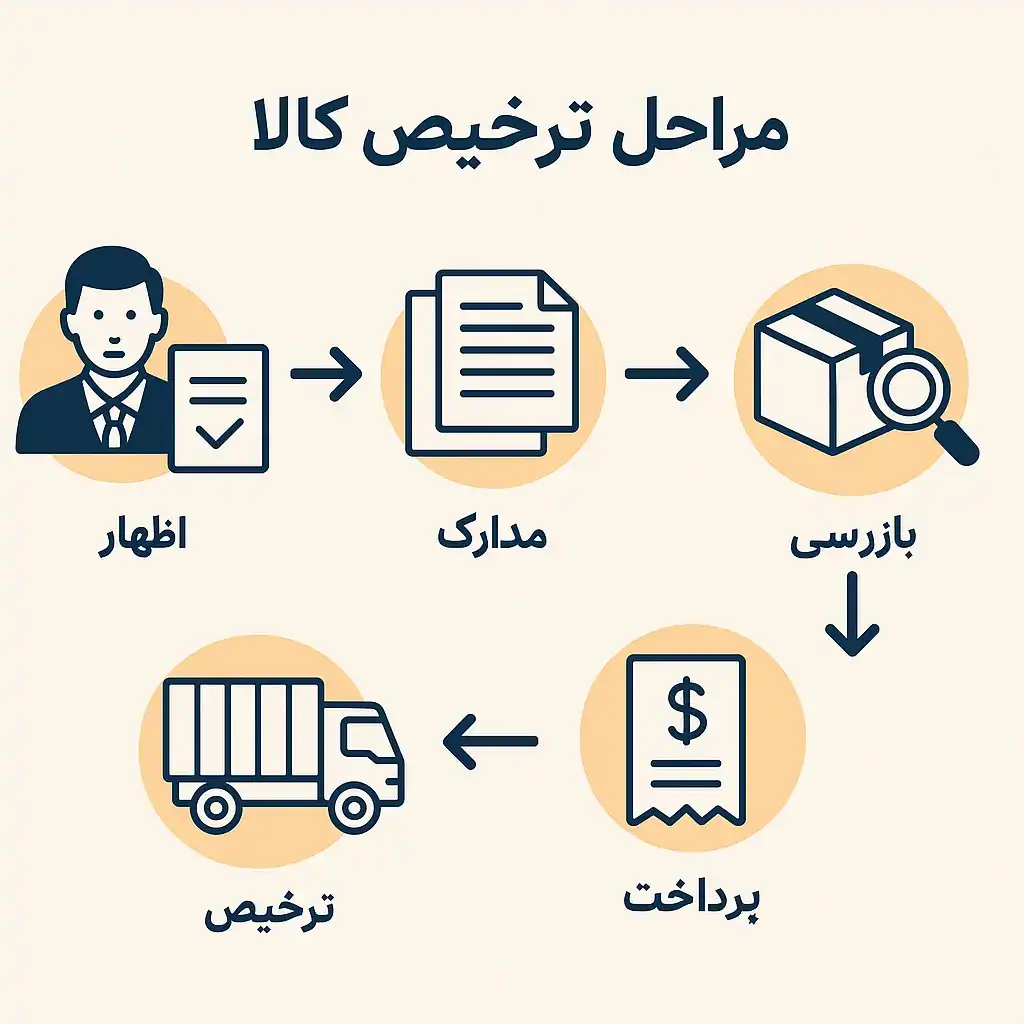
The goods clearance process is a systematic, step-by-step procedure that, if followed correctly, leads to the legal exit of goods from Customs. Although the operational details may slightly differ across various customs offices, the main framework of the stages is as follows:
This is the first and most critical stage, where the owner of the goods or their legal representative (customs broker) officially announces the goods-related information to Customs.
Method of Declaration: Currently, goods declaration is primarily carried out electronically through customs systems.
EPL System (Enterprise Resource Planning): The older declaration system that is still used for certain procedures.
Virtual Trading Desk (VTD): The modern, integrated customs system aimed at consolidating all necessary stages and permits into a single platform. All declarations must be registered through this system.
Required Information in the Declaration:
After the declaration is registered, Customs reviews the supporting documents to confirm the declared information. The accuracy and completeness of these documents play a fundamental role in the rapid advancement of the clearance process. Main documents usually include:
After the initial document review, Customs proceeds to assess the goods. This stage may include two parts:
Electronic/Documentary Assessment: In this stage, the customs expert uses the declaration information, matches it with the customs tariff and import tariffs, and estimates the customs value and the payable duties and taxes.
Physical Inspection: In some cases, Customs may issue an order for the physical inspection of the goods. This usually occurs under the following conditions:
Sampling for Laboratory Testing (if needed for Standard, Health, etc. confirmation): Customs experts inspect the goods in the presence of the owner’s representative and reconcile them with the documents. If necessary, sampling is performed and sent to accredited laboratories (state or private labs approved by Customs) for testing.
Based on the value of the goods (confirmed by Customs), the Customs Tariff Code (HS Code), and current laws and regulations, the entry duties and customs taxes are calculated.
Basis of Calculation: The main basis for calculation is the CIF Value (Cost, Insurance, Freight), which includes the cost of the goods, insurance cost, and freight cost up to the first port or point of entry into the country.
Entry Duties: An expense collected upon the import of goods, consisting of two parts: Customs Duty (typically 4% of the goods value, sometimes reduced or exempted) and Commercial Profit (which varies based on the type of goods, ranging from zero to over 150% of the goods value). The final entry duty rate is obtained by summing these two amounts.
Value Added Tax (VAT): This tax, applied to the value added to the goods during various stages of production and distribution, is also applied at Customs. The current rate is 10% and is calculated on the total customs value (CIF) and entry duties:
Other Taxes and Levies: Other levies may also be applied based on the type of goods or specific regulations, such as:
After the final amount of duties and taxes is determined, the owner of the goods is obliged to pay them to Customs.
Payment Method: Payments are made electronically through bank portals connected to the customs systems.
Payment Receipt: After successful payment, a payment receipt is issued and registered in the customs system.
Warehousing and Demurrage Costs: If the goods are stored in Customs or related warehouses beyond the permitted time limit, warehousing and demurrage costs (container waiting charge at the port) will also be added to the total costs.
Upon successful completion of all the above stages, including document approval, payment of duties and taxes, and, if necessary, inspection and laboratory confirmation, Customs proceeds to issue the Customs Permit (or Release Permit).
Nature of the Release Permit: This document is the official authorization from Customs for the exit of goods from customs premises and their entry into the country’s commercial cycle (or their final exit).
System Registration: The Release Permit is registered in the customs system, and the physical exit of the goods from Customs is facilitated.
Goods Exit: Upon presentation of the Release Permit and the warehouse invoice (if necessary), the goods are collected from Customs or the customs warehouse.
To facilitate and expedite the goods clearance process from various customs offices, attention to the following points is essential:
Accuracy in Determining the Customs Tariff Code (HS Code): An error in determining the HS Code is one of the most common reasons for delay, penalties, or claims for differences in import duties. It is recommended to use the services of specialized experts or the Customs Tariff Book (or relevant software) to determine the HS Code and ensure its accuracy. An incorrect HS Code can lead to the application of a higher rate, the need for unwanted permits, or even the prohibition of goods entry.
Using the Services of Official Customs Brokers (Clearing Agents): Official customs brokers are individuals licensed by the Customs Administration of the Islamic Republic of Iran to operate, possessing specialized knowledge and sufficient experience in customs laws, regulations, procedures, and formalities. Using the services of a reputable and experienced broker can lead to:
Preparation for Special and Laboratory Inspections: Some goods, especially imports that require compliance with mandatory standards, health approvals, or security checks, may face more detailed inspections and the need to send samples to a laboratory. Ensuring the goods comply with the standards and regulations of the importing country before purchase can prevent serious problems.
Continuous Monitoring of New Laws and Regulations: Customs laws, tariffs, circulars, and regulations related to import and export may change throughout the year. Traders and economic activists must continuously stay informed of the latest changes and regulations through the Customs Organization website, the Chamber of Commerce, and other reliable sources.
Completeness and Consistency of Documents: Ensure that all required documents are complete, correct, and free of inconsistencies or alterations. Any discrepancy between the invoice, bill of lading, packing list, and declaration can lead to delays or even seizure of the goods.
Review of Import/Export Restrictions and Prohibitions: Before proceeding with a transaction, ensure that the entry or exit of the goods is not prohibited or restricted. Some goods are subject to prohibition or require difficult-to-obtain special permits due to security, health, environmental, or economic issues.
Understanding the Specific Procedures of Each Customs Office: Although the general stages of clearance are the same, some customs offices may have specific procedures or different priorities for the clearance of various types of goods. Familiarity with these procedures can be useful, especially if you frequently use a particular customs office.
Management of Time and Ancillary Costs: Awareness of warehousing costs, demurrage, and the permissible time for goods storage in Customs helps with more accurate planning. Striving to complete the clearance process in the shortest possible time prevents the imposition of additional costs.