
Goods Clearance Services
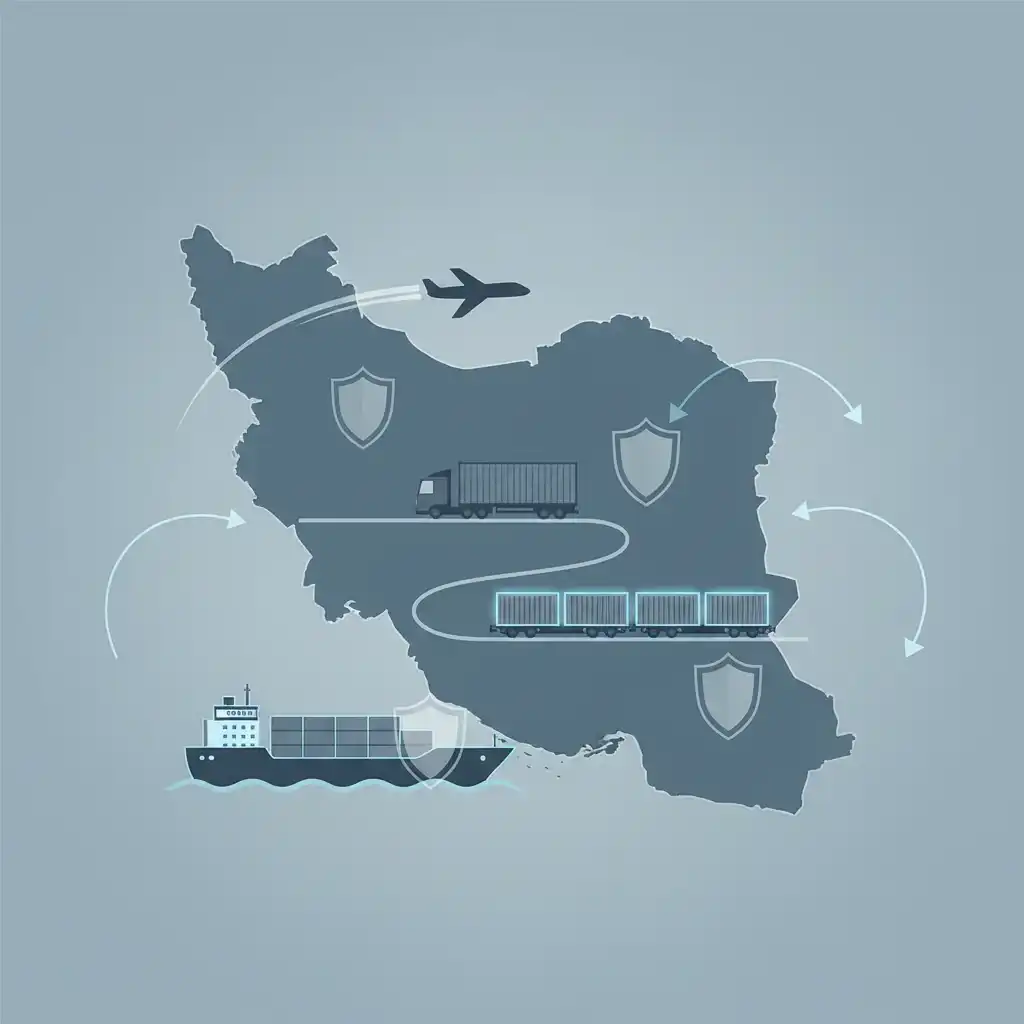
International transportation plays a fundamental role in the economic development of countries, and in Iran, given its excellent geographical position and location on important global trade routes, it has gained special significance. Due to its long coastlines on the Persian Gulf and the Caspian Sea, its border with 15 countries, and its location within the main North-South and East-West transit corridors, Iran has always been a strategic gateway for global trade.
With the growth in the volume of foreign trade, the complexity of risks associated with moving goods over long distances and through multi-modal methods has increased. One of the vital pillars in this field is transport insurance, which leads to risk reduction and guarantees the financial security of goods owners, transport companies, and other stakeholders. In the absence of suitable insurance, the slightest incident can lead to the bankruptcy of commercial companies and disruption of the national supply chain.
This document will detail various aspects of international transport insurance within the context of Iranian trade, types of coverage, legal frameworks, and the challenges facing this industry.
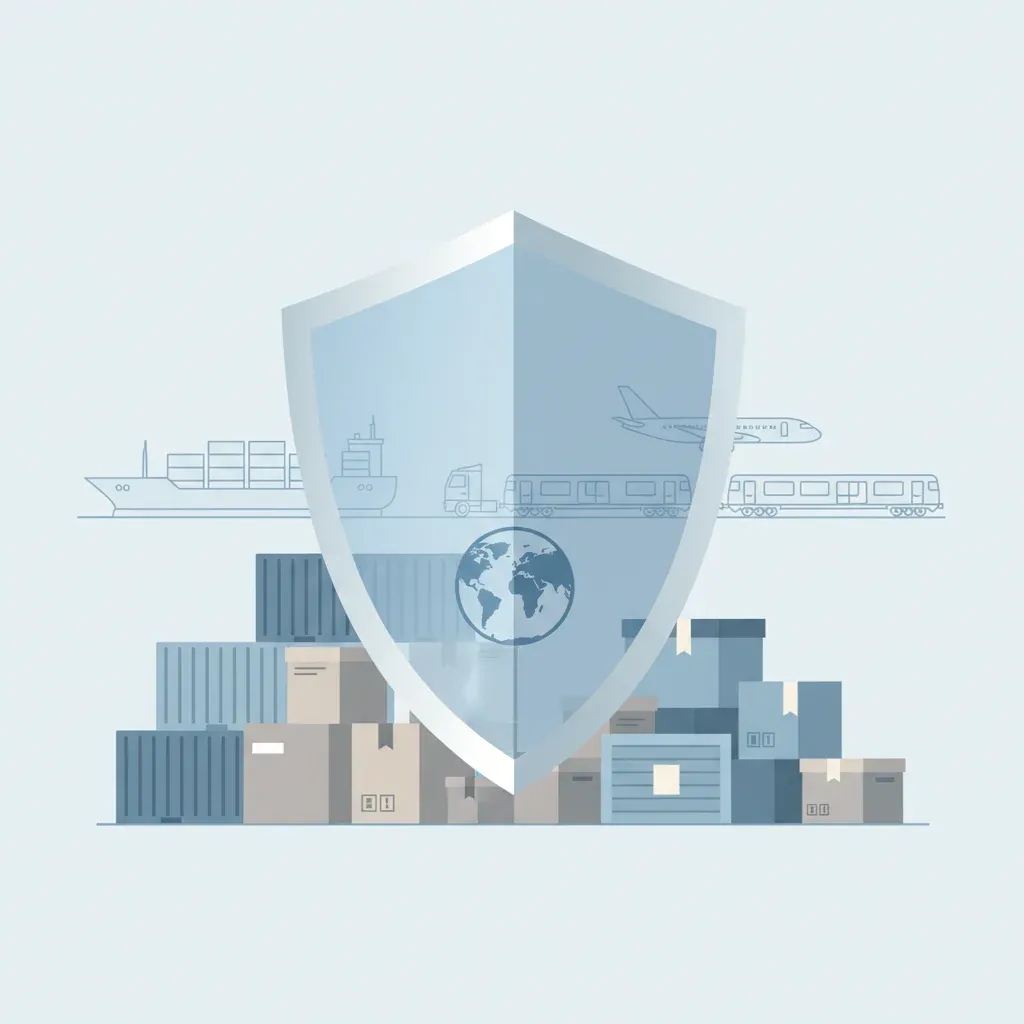
International Transport Insurance (Marine Cargo Insurance or Transit Insurance) is a contract under which the insurer, in exchange for receiving a premium from the insured (the owner of the goods or their representative), undertakes to compensate for losses and damages incurred to the goods during transit from the origin to the final destination.
The Importance of Insurance in Trade: Risk Transfer
The main objective of insurance is the transfer of financial risk from the owner of the goods to the insurance company. In international trade, valuable goods are exposed to numerous hazards for months. Without insurance, any incurred damage directly affects the profitability and capital of the company.
Main Coverages and Covered Factors
International transport insurance usually covers damages resulting from the following factors:
The insurer is obligated to compensate for the loss based on the actual damage incurred, but not more than the insured amount.
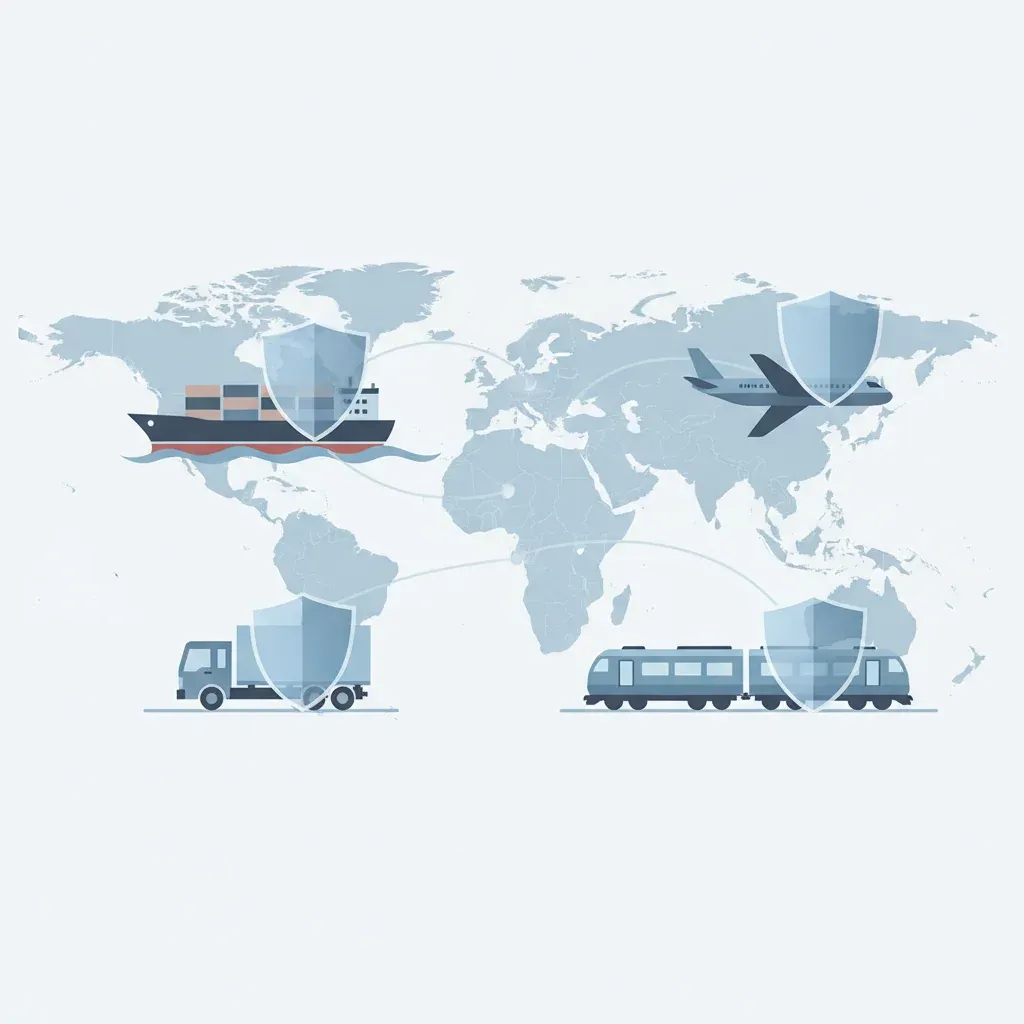
Types of insurance are categorized based on the method of transportation used (each of which has a different risk profile):
1. Marine Insurance
This insurance is the most common type, given the high volume of Iran’s trade through international waters (especially Shahid Rajaei and Imam Khomeini ports). This insurance was initially defined to cover vessels (Hull & Machinery), but today it focuses more on cargo coverage.
International Standard Coverages (Institute Cargo Clauses – ICC):
2. Air Cargo Insurance
Due to the high speed and high value of goods transported by aircraft, this type of insurance focuses on risks such as plane crash, damage due to long delay, theft, or damage resulting from improper handling at airports. Standard air coverages are also regulated based on air federation regulations.
3. Land Transit Insurance
This insurance is used for international transportation by trucks and trains (especially on land routes to Turkey, Iraq, Afghanistan, and Central Asia).
Key Regulations: Iranian insurers usually follow the CMR Convention (Contract for the International Carriage of Goods by Road) when issuing this type of insurance, which limits the carrier’s liability for damage up to a specific ceiling based on the weight of the goods (kilograms). These limitations are often lower than the actual value of the goods, which is why full insurance by the insured is necessary.
4. Multi-modal Transport Insurance
This insurance policy provides integrated coverage for goods that use two or more modes of transport during the journey (e.g., sea to port, and then land to the final warehouse). This prevents the creation of coverage gaps between different transport contracts
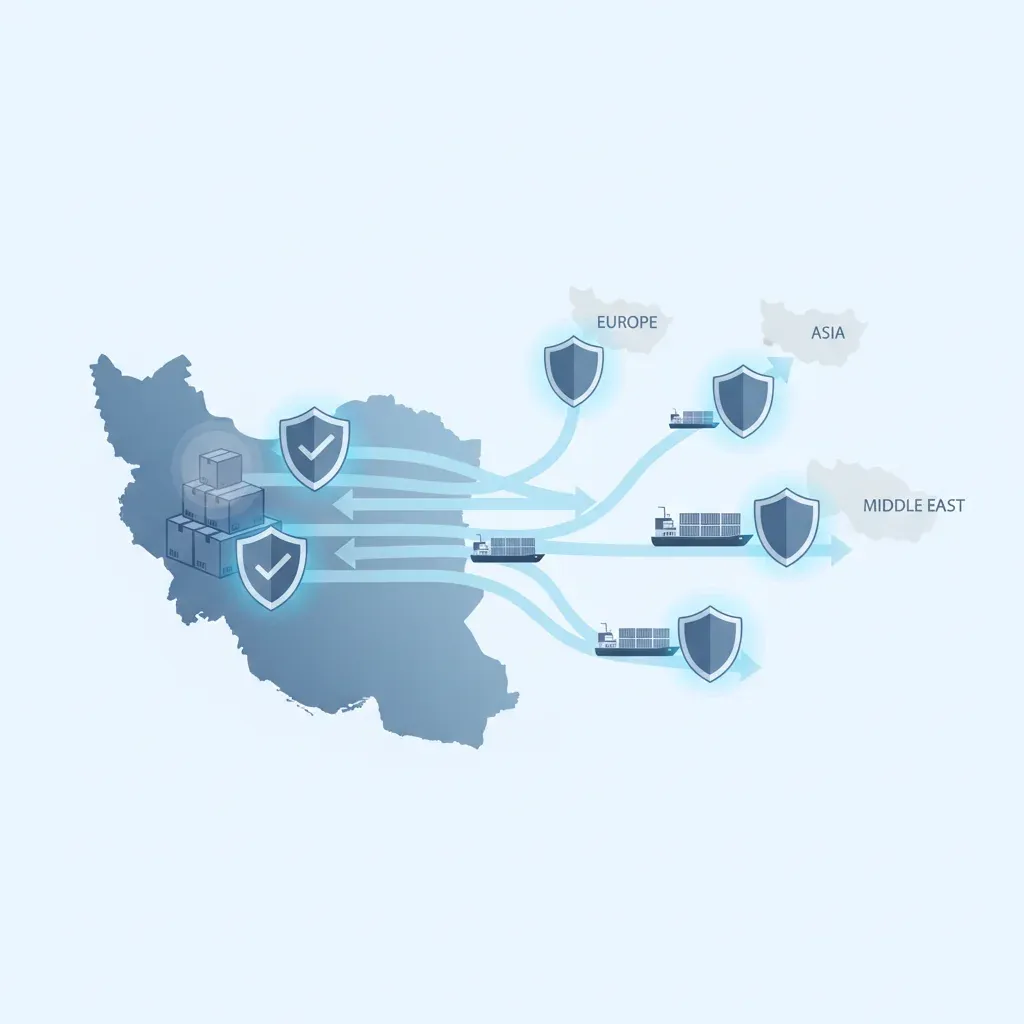
The insurance industry in Iran, especially reinsurance companies and general insurance companies, plays a vital role in facilitating and guaranteeing foreign trade.
Protection of Exporters and Importers
By offering specialized products, Iranian insurance companies enable exporters to participate in global markets with greater credibility. In many international tenders, providing a valid transport insurance policy is a contractual requirement. These insurances reduce financial risk and preserve the liquidity of trading companies.
International Legal Frameworks and Conventions
The activity of Iranian insurers at the international level is conditional upon compliance with global rules and conventions. Some of the most important of these frameworks include:
Hague-Visby Rules: These rules regulate the limitation of liability of the sea carrier and form the basis of maritime transport contracts (B/L).
CMR Convention: As mentioned, it applies to international land transport.
Lloyd’s of London Insurance Rules and Regulations (Institute Clauses): Although Iranian companies issue domestic insurance policies, in cases where the risk exceeds the capacity of domestic acceptance, they connect to the global market through reinsurance and use internationally accepted standards.
Reinsurance and Risk Acceptance Capacity
Due to the high volume of Iran’s oil and non-oil cargoes, some transport risks are very heavy (such as the transport of refinery equipment or cargoes worth several hundred million Euros). In these cases, Iranian insurers transfer a portion of the risk to international reinsurance companies to ensure that they have the ability to fully compensate in the event of a major loss.

The insurance and transport market in Iran has always faced a combination of structural barriers and emerging opportunities.
Challenges
One of the biggest problems is the sharp fluctuation in the exchange rate. The Rial value of the insurance premium and the claim payment constantly changes. If the cargo valuation was done based on a lower exchange rate at the time of contract execution, at the time of loss occurrence and Rial payment, the insurer may suffer a loss or the insured may not receive the true value of their cargo.
Delays in customs processes lead to an increase in the time the cargo is under insurance risk. These delays can cause spoilage, damage, or increase storage costs covered by the insurance.
Despite advancements, coverage against certain specific political risks (such as the seizure of a vessel or cargo due to sanctions) remains a complex challenge, as international companies are very cautious in accepting these risks.
Differences in the interpretation of transport contract terms and international versus domestic claims adjustment methods sometimes lead to long-term disputes among stakeholders.
Opportunities
The use of smart cargo tracking systems (GPS Tracking), the Internet of Things (IoT) for monitoring temperature and humidity of sensitive goods (such as agricultural and pharmaceutical products), and the use of blockchain for transparent contract registration can significantly increase transparency and efficiency.
Providing the infrastructure for quick and electronic issuance of insurance policies, especially for small and medium-sized enterprises (SMEs), increases the speed of commercial operations.
The development of North-South and East-West corridors increases the volume of transit passing through Iran, and consequently, the demand for specialized transport insurance increases.

In transport insurance, the method of assessing and calculating the claim amount is of high importance. These calculations must be performed based on principles verified by loss adjusters (Surveyors).
The Concept of Ad Valorem Valuation
In most international transport insurances, the value of the cargo is calculated on an Ad Valorem (based on the nominal value) basis. This method has a greater advantage for the insured compared to liability-based insurances, as compensation is based on the actual value of the goods.
Deductible
Many insurance policies, especially for general cargo, have a deductible. The deductible is an amount of the loss that always remains the responsibility of the insured and is not paid by the insurer. This encourages the insured to be more careful in preserving the integrity of the cargo and prevents frequent, minor claims.
Pro Rata Rule (Average Clause)
In cases where the actual value of the cargo is greater than the insured amount (Under-insurance), the insurance company will not pay the full amount of the loss. Instead, it will calculate the loss proportional to the ratio of the insured amount to the actual value.
If the insured amount equals the actual value, the ratio will be equal to 1, and the full loss will be paid.
Exclusions
It is crucial for the insured to be aware of items that are not covered. The most important exclusions in transport insurance include:
For Iran to be able to fully utilize its transit capacities, the harmonization of the insurance industry with global standards is essential.
Development of Domestic Reinsurance
Reducing dependence on foreign reinsurance companies under sanctions requires strengthening the capacity of domestic reinsurance companies and increasing their capital so that they can cover the large risks of national and commercial projects independently.
Training and Specialization
There is an urgent need for specialized training for loss adjusters, vessel inspection officers, and insurance experts in the legal complexities of maritime conventions (such as Rotterdam Rules and Hamburg Rules). This ensures that the claims assessment process is conducted faster and more fairly.
The Role of Insurance in Facilitating Trade Finance
International banks and financial institutions, when granting Letters of Credit (LC) or purchase facilities (Pre-shipment Finance), usually consider the existence of a valid insurance policy as collateral or guarantee for loan repayment. Strengthening the insurance system facilitates commercial actors’ access to international financial resources.
Safir Norooz Mandegar Company, with a credible history in the field of foreign trade, is a provider of complete and specialized services in the field of international insurance and transportation; services that have been designed with the aim of ensuring security, speed, and risk reduction in the process of moving exported and imported goods.
In the international transportation sector, this company, in cooperation with a network of credible maritime, land, air, and rail lines, makes it possible to send goods worldwide. The precise management of the logistical chain from origin to destination, including loading, clearance, cargo tracking, and safe delivery of goods, is carried out by the specialized transportation team of Safir Norooz Mandegar.
In the field of international cargo insurance, the company, in cooperation with credible domestic and foreign insurance institutions, offers services such as the issuance of transport insurance policies, in-warehouse goods insurance, export insurance, and import insurance, so that customers’ capital remains protected from any potential risk at every stage of the commercial route.
Safir Norooz Mandegar, with an approach based on trust, transparency, and the quality of logistical services, has managed to become one of the reliable partners in the international trade chain.
Safir Norooz Mandegar – Confidence in Insurance, Precision in Transportation, Tranquility in Global Trade.