
Export and Import Services
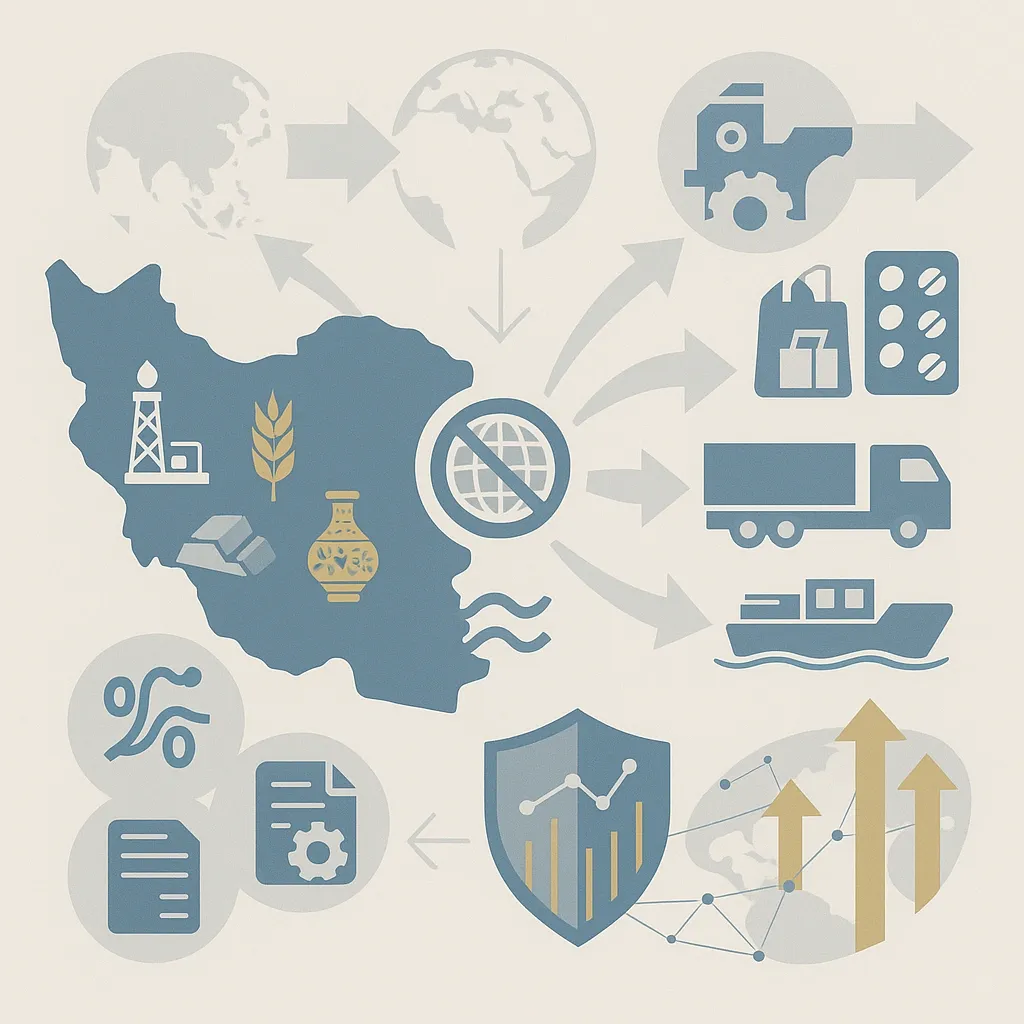
Export and import are two fundamental pillars of every country’s economy, and in Iran they play a crucial role in economic development, job creation, and attracting foreign investment. Foreign trade acts as the driving engine of economic growth — influencing not only the trade balance, but also shaping domestic production structures, pricing mechanisms, and overall social welfare.
Iran’s strategic geopolitical position, with access to open waters via the Persian Gulf and the Sea of Oman, and its location along the North–South and East–West international corridors, offers tremendous potential for becoming a regional hub for global trade.
This document provides a comprehensive analysis of the multiple dimensions of Iran’s foreign trade, exploring topics from the importance of non‑oil exports to the structural and sanction-related challenges, and concludes by outlining the future outlook of Iranian trade amid evolving global and regional developments.
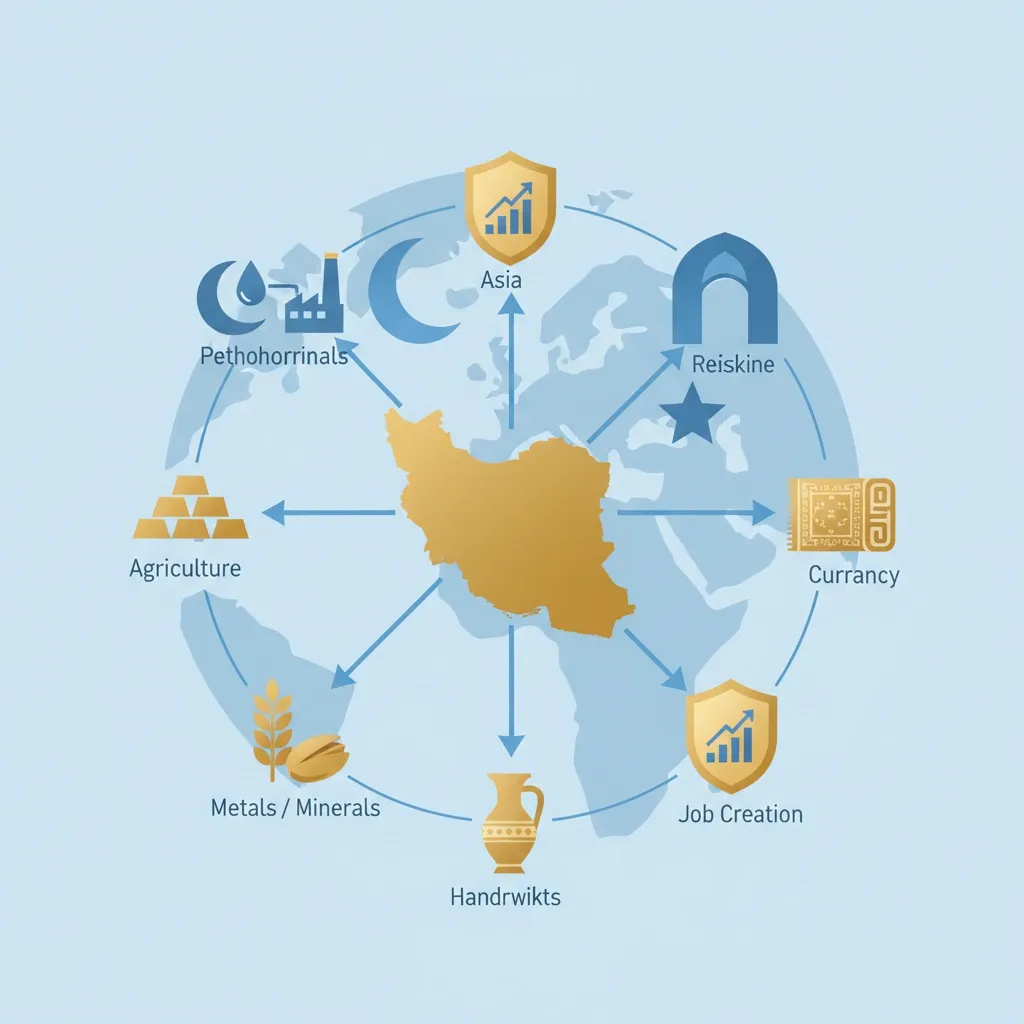
Exports, especially non‑oil exports, are considered the backbone of Iran’s economic resilience against fluctuations in the global energy market. Sole reliance on oil revenues increases the vulnerability of the economy to geopolitical changes and global prices; therefore, diversification of the export basket is a strategic necessity.
Exports of non‑oil goods such as petrochemicals, agricultural products, handicrafts, metals, and minerals provide a stable and primary source for the inflow of foreign currency into the country’s economic cycle.
Petrochemical and Chemical Industries
This sector has always had the largest share in Iran’s non‑oil exports. Considering the vast reserves of hydrocarbon resources, converting these raw materials into high‑value‑added products (such as polymers, fertilizers, and oil derivatives) is a top priority.
Agricultural and Food Products
Thanks to climate diversity, Iran has high potential in exporting tropical fruits and dried fruits (such as pistachios, saffron, and dates).
Handicrafts and Tourism (Service Exports)
Iranian handicrafts, with thousands of years of history, play an important role in introducing culture and generating sustainable foreign currency income.
Minerals and Metals
The export of iron ore, concentrate, billet and steel ingot, along with copper and aluminum, accounts for a significant part of Iran’s export value.
Export development forces domestic producers to constantly improve product quality to survive in international markets. This leads to the adoption of global standards, innovation in production processes, and reduction of overhead costs. In the long term, this process results in a positive “ripple effect” throughout the country’s industrial value chain.
The historical focus on traditional markets (mainly Europe and Asia) is changing. Considering geopolitical developments and the need to reduce dependency risk, the focus on regional and neighboring markets has increased.

Imports, although they can serve as a means of technology transfer and fulfillment of essential needs, improper management can lead to foreign exchange budget deficits and harm domestic production.
A positive trade balance requires that the value of exports exceed the value of imports.
Iran’s imports are mainly divided into two basic categories: intermediate and capital goods, and consumer goods.
This category includes industrial machinery, advanced equipment, spare parts, and raw materials for manufacturing industries such as pharmaceuticals, automotive, and textiles. Such imports are vital for maintaining production capacity and preventing factory shutdowns.
Example: Importing sensitive electronic components or advanced medical equipment that cannot currently be produced domestically with existing technical knowledge.
Despite efforts to ban or restrict the import of luxury consumer goods, these items still occupy a portion of the market. Managing this segment is directly linked to foreign currency demand control and support for domestic production of similar goods.
Import management should be based on the principle of maximizing developmental and productive needs and minimizing consumption of non‑essential goods.
Facilitating Raw Material Imports
Prioritizing foreign currency allocation for the import of raw materials and parts required by active production lines to prevent unemployment and stagnation.
Developing Domestic Production (Reducing Dependency):
Targeted investment in import‑substitution projects for industries with strong local production potential.
Regulatory Instruments:
Using tools such as variable customs tariffs, import duties, and quota systems to control the entry of goods competing with domestic production.
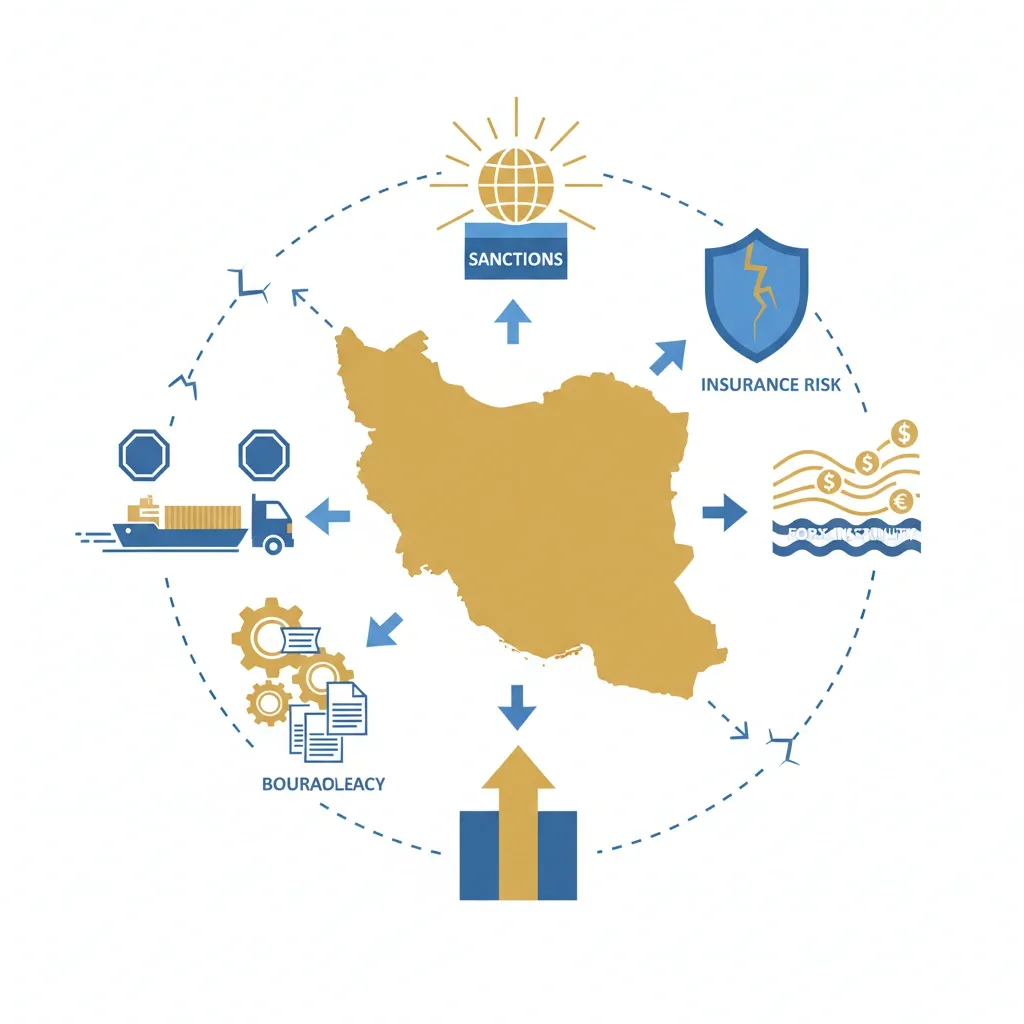
Iran’s Foreign Trade over the Past Two Decades Has Been Constantly Influenced by Structural and Geopolitical Factors That Have Created Serious Obstacles to Its Development.
The largest structural challenge to Iran’s trade is multilateral sanctions, which directly affect two crucial sectors:
Sanctions have severely disrupted Iranian banks’ access to the international financial messaging system (SWIFT). This makes foreign exchange transactions complicated, costly, and time‑consuming. Traders must resort to alternative channels — such as barter, regional money transfers, or non‑convertible currencies — which often involve unfavorable exchange rates and high financial risk.
Major international insurance and shipping companies avoid cooperation with Iran due to sanctions‑related risks. Consequently, the costs of insurance and ocean freight for Iranian goods increase drastically, directly reducing the competitiveness of final products in global markets.
Severe volatility in the exchange rate — especially between the free market rate and the officially allocated currency rate — makes long‑term planning extremely difficult for exporters and importers.
For Exporters
Unexpected increases in the official exchange rate can lead to non‑competitive prices for Iranian goods in international markets, unless exporters can apply adequate risk‑hedging mechanisms.
For Importers
Uncertain currency valuation directly affects the final cost of imported goods, leading to higher production expenses and increased domestic inflation.
Despite significant efforts toward modernizing customs operations, challenges remain
Delays in Customs Clearance
Complex procedures for obtaining permits, completing inspections, and registering orders cause long cargo retention times in customs. This “time cost” is extremely expensive in international trade.
Regional Regulatory Differences
The lack of full coordination among governmental trade authorities — such as the Ministry of Industry, Mine, and Trade (MIMT), the Central Bank, and Customs Administration — creates confusion and heightens operational risk for economic actors.
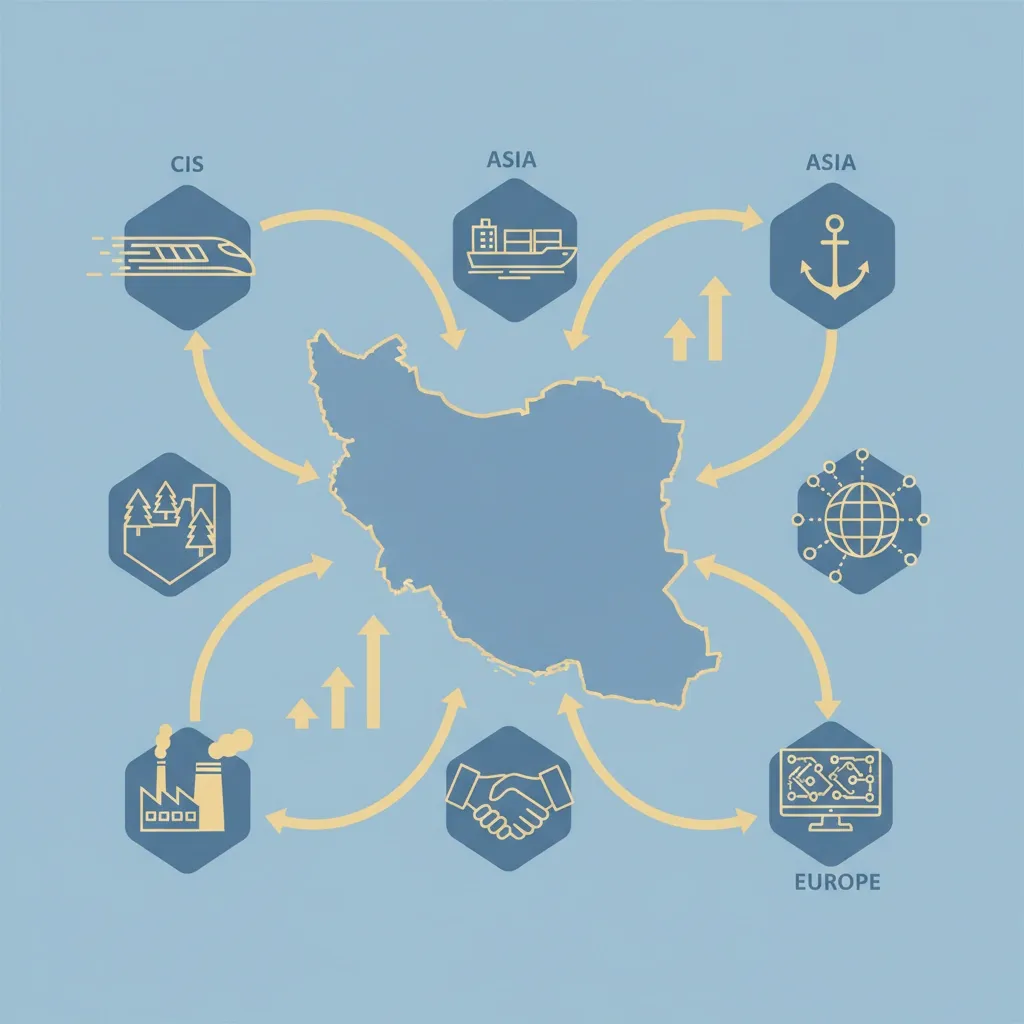
Iran’s foreign trade, despite structural and geopolitical constraints, possesses significant growth potential driven by its geographic position, resource diversity, and human capital. Strategic reforms and regional partnerships can transform these advantages into long‑term economic opportunities.
Iran’s strategic location at the crossroads of Asia, the Middle East, and Europe provides immense potential for becoming a transit and trade hub.
The ongoing global transition toward renewable and non‑fossil energy highlights the importance of Iran’s non‑oil export sectors:
The digitalization of trade processes is central to future competitiveness:
Safir Norooz Mandegar Trading Company, leveraging extensive experience in international commerce, proudly provides export and import services in a fully professional manner consistent with global standards.
Our goal is to establish a safe, transparent, and reliable pathway for commercial exchanges between Iran and reputable global markets.
In imports, the company directly cooperates with trusted international manufacturers and suppliers to manage the entire process of purchasing, transportation, customs clearance, and delivery.
The primary focus lies in the import of industrial goods, specialized equipment, raw materials, and consumer products from leading global brands.
In exports, Safir Norooz Mandegar acts as the operational partner for Iranian companies and producers, offering comprehensive services such as target market identification, international marketing, commercial packaging, customs procedures, and logistics management — ensuring that high-quality Iranian products are presented in the best possible form in foreign markets.
Through technical expertise, broad global connections, and a specialized trade team, Safir Norooz Mandegar serves as a trusted bridge between domestic manufacturers and international markets — a partnership that stands by your side on the path to growth, development, and commercial success.