
Import and Export Services
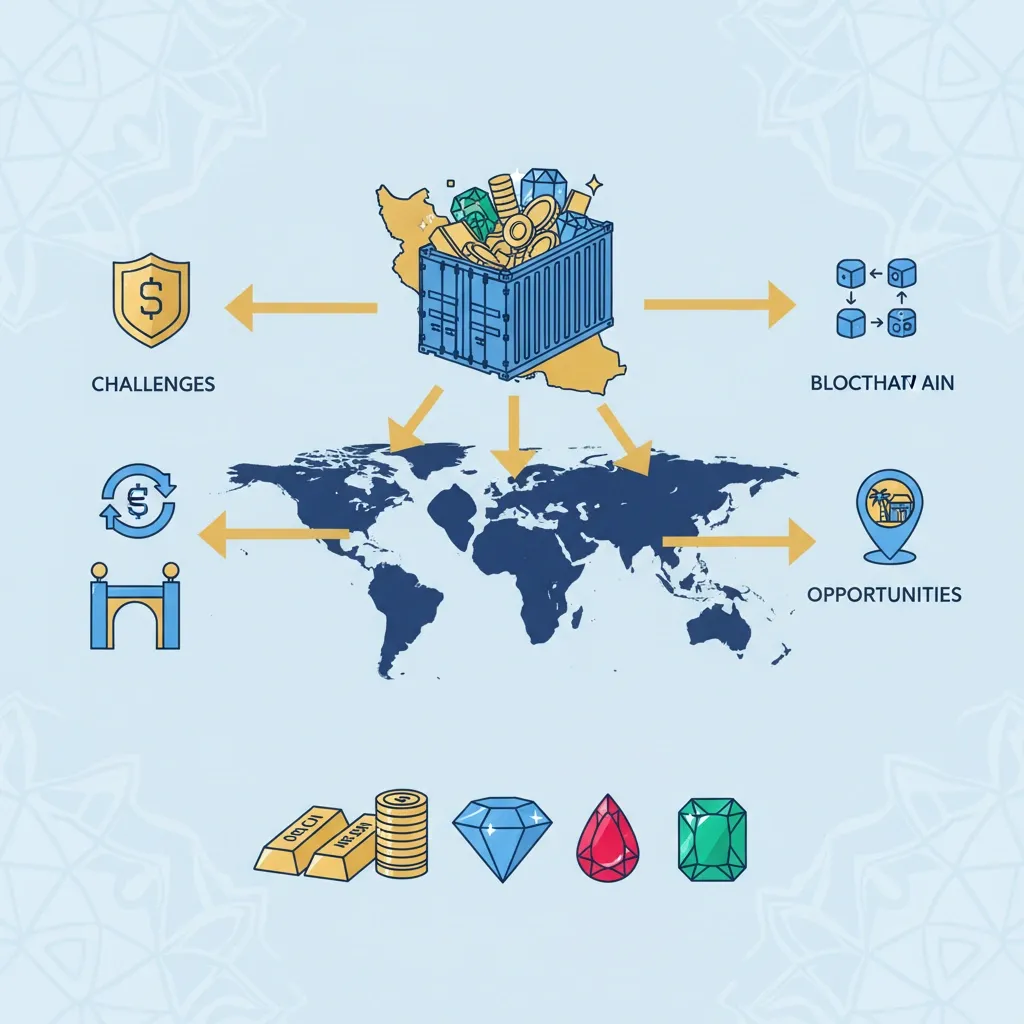
Iran, as one of the world’s oldest civilizations in the art and craft of jewelry making, has always held a distinguished role in the exchange of gold and precious stones. The millennia‑long history of this industry — from the Achaemenid era to modern times — reflects the depth of Iranian expertise in gemstone cutting, artistic design, and crafting luxurious ornaments.
Despite broad economic sanctions and severe restrictions on the international banking system, the import of gold, jewelry, and gemstones continues at a notable scale. This flow is not only essential for meeting domestic market demand, but also serves to supply raw materials and uncut stones for Iran’s local jewelry industry — supporting value‑added production and re‑export activities.

The future of imports in this field is shaped by two major influencing factors: ongoing international restrictions and changing domestic consumption patterns. These dynamics define how Iranian traders and manufacturers source and distribute high‑value commodities such as gold, gemstones, and jewelry components.
Over the past decade, economic sanctions have limited Iran’s ability to import directly from primary extraction or manufacturing hubs — such as African mining countries, or major cutting centers in India and Belgium. Consequently, imports of gold, jewelry, and especially gemstones are largely conducted through transit and intermediary routes, where financial operations are more flexible and authentication procedures can be managed regionally.
United Arab Emirates (Dubai):
Dubai stands as one of the world’s leading hubs for gold and jewelry trade. Its financial flexibility allows easy currency conversion, re‑certification of shipments, and simplified documentation procedures. The geographical proximity and strong trade infrastructure make Dubai the primary transit center for Iranian operators.
Turkey (Istanbul):
Istanbul, with its long history in jewelry craftsmanship and being part of the EU Customs Union, serves as a gateway to European markets and a source of semi‑finished stones and jewelry components. Many Iranian firms rely on Turkish suppliers for intermediate imports and logistics coordination.
Hong Kong and China:
Both regions remain leading suppliers of cut diamonds and decorative gemstones, offering competitive prices and large-volume availability. They represent vital partners for Iranian importers seeking diversity in quality and grading levels.
Global trends are decisively moving toward greater supply chain transparency. Internationally, advanced technologies such as blockchain-based provenance tracking are being used to trace gemstone origins — especially diamonds — to eliminate the circulation of “blood diamonds.”
For Iran, implementing similar traceability systems is increasingly necessary not only to reduce sanction risk, but also to enhance consumer confidence and strengthen regulatory compliance. These systems can record data on:
Such frameworks would become instrumental in preventing smuggling, ensuring standard purity levels, and promoting ethical and quality assurance across the jewelry supply chain.
Imports of gold bullion or coinage mainly depend on Central Bank policy and the gap between the official exchange rate and the parallel (free market) rate.
During times of high inflation or currency volatility, the domestic demand for physical gold imports tends to rise — even within regulatory limits — as individuals and institutions seek a hedge against Rial fluctuations and store of value protection.

The legal and customs framework governing gold and gemstone imports in Iran is designed to maintain transparency, standardization, and prevention of illicit trade. This structure combines domestic trade legislation, banking regulations, and international ethical standards concerning precious commodities.
The import of gold, jewelry, and precious stones falls under supervision by several official entities:
To import gold and jewelry legally, traders must complete multi‑stage authorization and documentation. Key requirements include:
Customs duties for precious imports vary according to type and processing stage:
IRICA uses both reference pricing tables and global spot rates (updated daily) to appraise imported quantities accurately and prevent undervaluation.
Due to sanction‑related sensitivities, Iranian law enforces strict rules on:
Noncompliance or use of informal transport routes can result in asset seizure, fines, or suspension of commercial privileges.
The government encourages modernization through:
Safir Norooz Mandegar operates strictly according to this framework:
This compliance‑oriented model enables the company to uphold trust, legality, and transparency, positioning Safir Norooz Mandegar as a responsible and credible importer in Iran’s high‑value trade ecosystem.
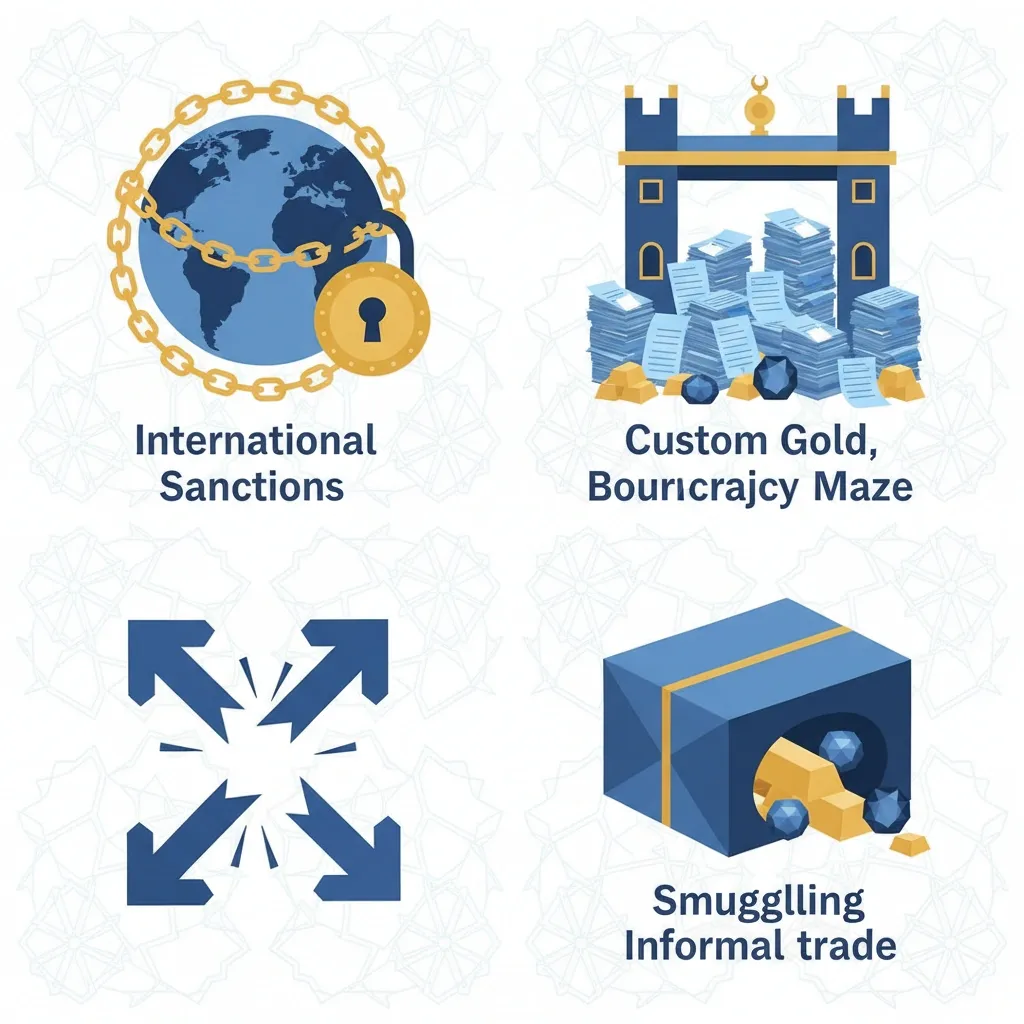
Structural and External Challenges in Iran’s Gold and Jewelry Import Industry
The development of Iran’s gold and jewelry import sector is hindered by a combination of systemic barriers and international constraints that prevent the industry from achieving its full potential.
The greatest obstacle is the disruption of access to global payment systems, particularly SWIFT. This limitation makes financing purchases from primary international sources extremely difficult.
Moreover, insurance risks related to international transport and the repatriation of export revenues have increased drastically, reducing operational security and liquidity for traders.
Access to official foreign exchange is highly restricted, and severe limitations on the use of commercial remittance channels such as Letters of Credit (LC) or Telegraphic Transfers (TT) force importers to rely on costly and risky alternatives — including unofficial exchange houses or barter arrangements.
As a result, import overhead costs rise significantly, reducing financial efficiency and competitiveness in the legal trade route.
A stark gap between official exchange rates and the free market rate, combined with differences in tariff applications, creates strong incentives for gold and jewelry smuggling into the domestic market.
A considerable share of trade volume moves through underground channels, leading to the loss of informal currency resources and reduced customs revenue.
This parallel market undermines transparent import operations and harms legitimate traders.
The absence of a comprehensive national system for certifying carat purity and gemstone authenticity is a serious deficiency.
Without a central independent authentication authority, domestic consumers struggle to trust imported or locally crafted goods lacking international grading certificates.
This issue is particularly acute for high‑value stones like diamonds and emeralds, whose market value depends heavily on precise assessments of their cut, color, clarity, and carat weight.

Despite structural barriers, the Iranian market presents significant opportunities for growth, modernization, and regional integration within the gold and jewelry sector — especially for professional, compliant trading firms like Safir Norooz Mandegar.
Iran’s geographic position between major trading corridors — Middle East, Central Asia, and Europe — enables it to become a transit and re‑export hub for gold and gems.
Through cooperation with logistical partners in Dubai, Istanbul, and Jeddah, imported raw materials (gold bullion, rough diamonds, sapphires, and emeralds) can be refined, assembled, and re‑exported across EAEU and CIS countries with value added domestically.
Strong demand exists for domestic craftsmanship and refining facilities that meet international standards (e.g., ISO, LBMA assay certification).
Expanding local refinement capacity — supported by imported high‑grade raw materials — creates export‑ready luxury goods that can compete regionally, particularly in artisanal jewelry and Islamic design niches.
The modernization of customs clearance and origin tracking through blockchain‑based provenance systems can give Iranian importers a technological advantage.
Implementing transparent digital certificates of origin and purity would increase consumer trust, deter smuggling, and attract foreign buyers seeking verified ethical sources.
New emerging markets and regional partnerships (Turkey, the UAE, India, China) provide alternative routes for supply chains outside Western sanctions.
These partnerships can enable joint ventures in jewelry design, gemstone cutting, and packaging, helping Iranian traders access global expertise while maintaining legal compliance.
Iranian jewelry design — inspired by Achaemenid, Sassanian, and Persian motifs — has strong cultural marketing potential.
By combining imported raw materials with domestic artistic heritage, brands can create certified “Persian Crafted” collections for export, boosting non‑oil export revenues and global recognition.
Implementation of smart customs systems (integrated SMT/SAMT) will reduce clearance times and improve predictability.
Early adoption and integration of such systems by firms like Safir provide a competitive advantage through cost reduction and faster delivery turnover.
Growing interest among young professionals in gemology, CAD jewelry design, and international trade management creates a pool of skilled talent.
Companies investing in training and workshop development can build a specialized workforce capable of meeting international market standards.

Iran’s internal market for gold and jewelry reflects a unique intersection of cultural tradition and economic behavior, blending luxury consumption with financial hedging. It has emerged as one of the few sectors that thrives under inflationary pressure, simultaneously serving as both a savings instrument and an artistic industry.
In the post‑COVID landscape and amid chronic inflation, the investment motive dominates the volume segment of demand.
Consumers increasingly favor high‑weight, high‑purity items such as:
These are easily tradeable and perceived as low‑risk, functioning as cash equivalents in periods of currency devaluation.
The luxury segment, although smaller in volume, commands exceptional margins.
Demand concentrates on:
This market is status‑oriented, powered by social visibility, gifting culture, and rising interest in custom‑made artistry.
The evolving trend toward customized jewelry (personalized pieces) has created a surge in imports of rough and cabochon stones rather than finalized jewelry.
This transformation enables Iranian craftsmen to:
Result: Local workshops transform imported raw stones into high‑value finished jewels suitable for export or high‑margin domestic sale.
This model typically results in 20–45% net value advantage compared to importing finished jewelry, depending on design complexity and labor efficiency.
If re‑exported legally under registered hallmarking, the margin can create stable and sustainable foreign currency inflows for the national economy.
Relying on its extensive international network, technical expertise, and years of professional experience, Safir Norooz Mandegar provides specialized import services for gold, jewelry, and precious stones from the world’s most reputable sources.
Our objective is to deliver authentic, high‑quality products that meet the highest global standards in the field of jewelry and precious materials.
With an emphasis on accuracy, authenticity verification, and legal customs clearance, Safir manages the entire import process — from sourcing and purchase to transportation and final handover — following a fully professional and transparent model.
Our expert commercial team, comprehensively familiar with customs regulations and official directives on importing gold and gemstones, ensures that each item arrives securely, swiftly, and intact at its destination.
These services are tailored to meet the needs of:
Safir provides expert consultancy including: